
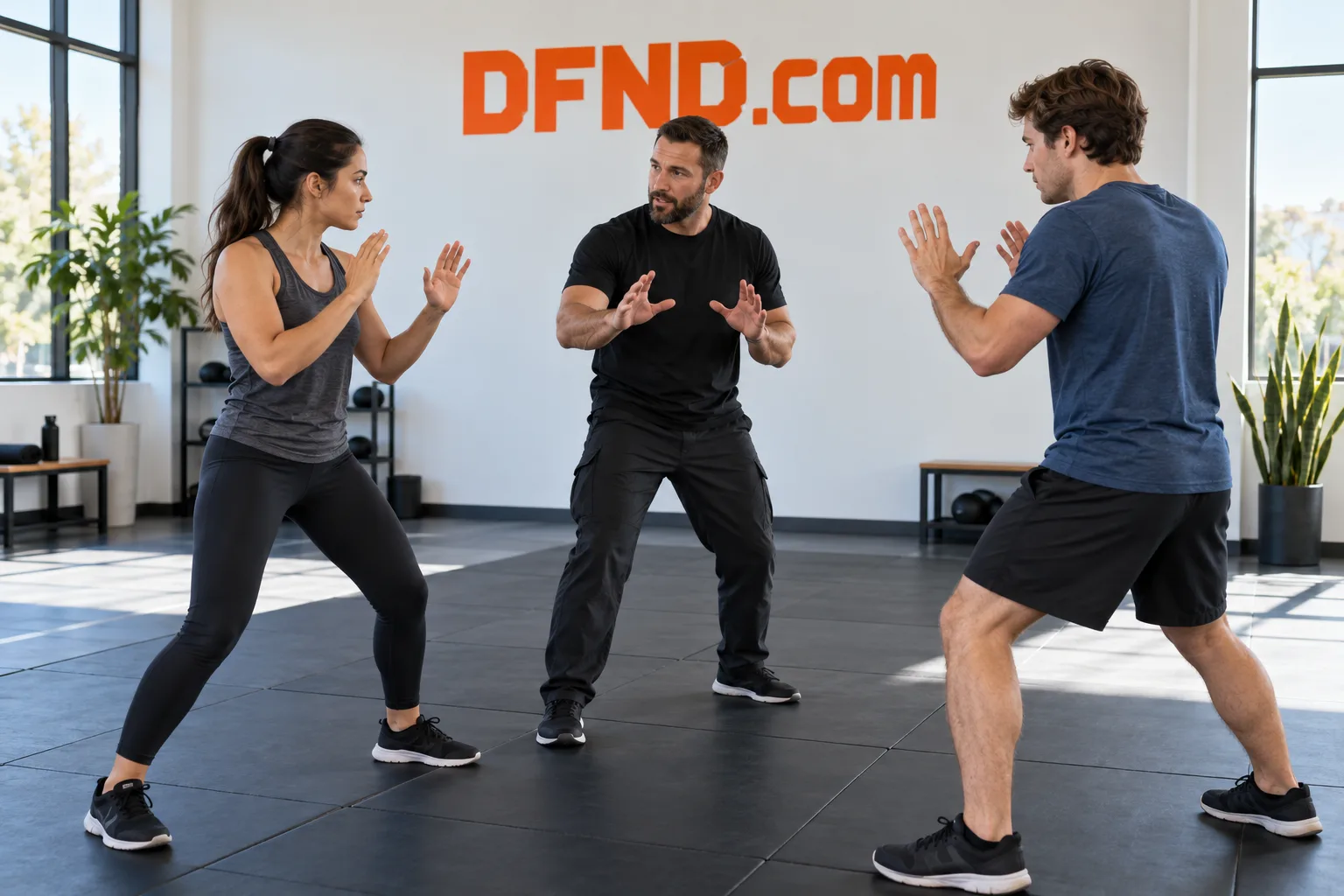
A self-defense studio needs a clear answer to a new student’s first question: what happens in the room? DFND.com reads as “defend” and could sit comfortably above a class timetable or on a training shirt. This illustrative concept puts the teaching offer first: an introductory workshop, a recurring course and bookable workplace sessions.
Choose the first students and the first class
An initial audience could be adults seeking a structured introduction to personal-safety awareness and supervised self-defense practice. The buyer may be a complete beginner who wants to understand the class before committing. Explain the activities, expected participation and available adaptations in everyday language. Give prospective students a way to ask about access needs before booking.
Start with an introductory workshop that has a defined beginning and end. The proposed format would include an explanation of boundaries, discussion of awareness and de-escalation, and supervised practice selected by the instructor. Publish the length, group size and clothing guidance once the teaching team has agreed them. Students should know whether a session includes partner work and how to decline an activity.
Describe learning objectives carefully. A workshop can offer time to practice and ask questions; it cannot promise that training prevents harm. Marketing should reflect what instructors actually teach and how the class is run. Let a prospective student judge the fit from a sample session outline instead of relying on dramatic claims about real-world outcomes.
Give continuing students a course to follow
The ongoing course would provide a planned sequence rather than a collection of unrelated drop-in classes. Each session could revisit prior material before introducing a new practice. The lead instructor would decide progression and participation requirements, with space for students to repeat material when useful. Explain that progression concerns the course curriculum, not a prediction of what a student could handle outside class.
- Publish the course schedule and the focus of each session.
- Describe how newcomers join and how missed sessions are handled.
- Provide an observation or introductory option where the instructor considers it appropriate.
- State how students raise concerns about an exercise or another participant.
- Explain the difference between course enrollment and open practice access.
A membership could cover a defined number of course sessions within a booking period. A separate workshop ticket would let someone try the format before joining. The studio would need plain cancellation and pause terms, along with a way to see remaining bookings. Price the membership after establishing teaching costs and realistic class capacity.
Make the instructor model specific
The operator would recruit instructors against the actual curriculum. Review relevant experience and credentials directly, then describe only what has been verified. A short demonstration lesson and a discussion of how an instructor handles nervous beginners would help assess teaching fit. No instructor or qualification is assumed to exist in this concept.
Assign a lead instructor to own lesson plans and review how classes are delivered. Supporting instructors would need clear responsibilities during paired practice and transitions between activities. Before opening bookings, decide the staffing level appropriate to the exercises and room. Capacity should follow the teaching plan, with adjustments when a session needs more individual attention.
Put student choice into the routine of the class. Instructors should explain an exercise before asking anyone to participate and agree how students signal that they want to stop. Arrange an alternative activity or observation option where practical. Written descriptions should match those habits, so a beginner’s experience is consistent with the booking page.
Build a separate workplace offer
A workplace session has a different buyer: an office manager, people team or business owner arranging a group booking. Offer a planning call to establish the audience, venue and intended learning objectives. A session focused on awareness and discussion may require a different room and instructor plan from one involving physical practice.
The corporate proposal would specify the agenda, attendance limit, equipment and setup requirements. It should also explain what the organization needs to tell participants before the event. Participation choices belong in that communication. The employer can arrange a session, but the instructor still needs a clear way to respect individual boundaries during it.
Keep corporate bookings separate from membership administration. Quote each event against its location and format, confirm a named contact and document any changes. Afterward, collect feedback about the clarity of instruction and whether the session matched its description. Feedback can guide the next booking without being presented as evidence that participants are protected from harm.
Turn interest into a workable timetable
For a first launch, imagine a studio offering one introductory workshop followed by a defined beginner course. The workshop page would explain the experience and show the next course dates. A participant who wanted to continue could choose a course place; someone seeking a workplace booking would reach a separate inquiry form with venue questions.
Local distribution could begin with community venues and nearby employers that already host adult learning activities. Share the actual workshop outline, accessibility information and booking terms. A useful introduction gives the organizer enough detail to decide whether to pass it on. Any partnership would need to be agreed before the studio advertises that venue or employer as involved.
Before committing to a permanent location, calculate the cost of room hire, instruction and administration for the proposed schedule. Check practical requirements with appropriate local advisers and venue managers. Arrange equipment storage, arrival instructions and a plan for handling cancellations. A timetable that the team can reliably staff is a better opening offer than a long list of classes waiting for instructors.
The name would connect bookings, the entrance sign and student communications. Test its spoken spelling with potential students and pair it with a descriptive phrase such as “self-defense training” wherever context is limited. The teaching model gives the identity its substance.